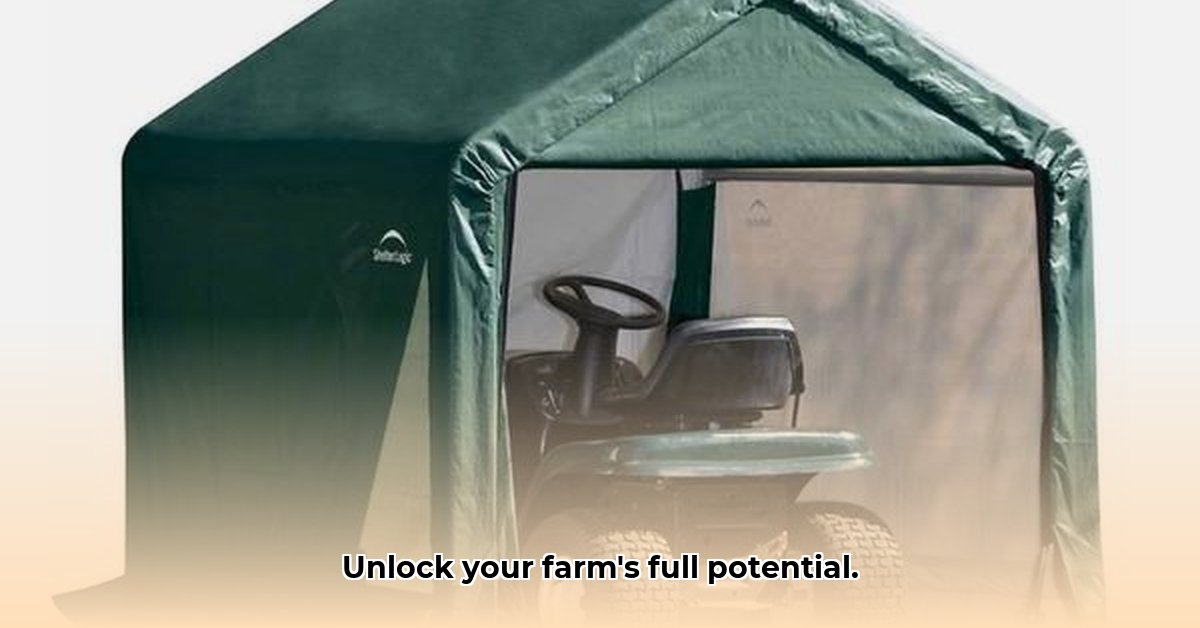
Tractor Supply Canopies: Protecting Your Investment and the Environment
Farming is demanding, and protecting your tractor and yourself from the elements is crucial for efficiency and sustainable practices. This guide provides actionable insights into selecting, installing, and maintaining tractor supply canopies, ensuring a long-lasting and cost-effective investment. We'll cover canopy types, installation, and sustainable considerations. For even more options, check out these greenhouse kits. Don't underestimate the impact of a well-chosen canopy. Did you know that a properly maintained canopy can extend the lifespan of your tractor by several years?
Canopy Selection: Finding the Perfect Fit
Before purchasing, assess your farm's specific needs. Consider these factors:
- Equipment Size: Will the canopy cover one tractor or multiple pieces of machinery? Larger equipment requires larger canopies.
- Climate: Harsh climates demand robust, durable canopies (steel frames are often best). Milder climates allow for lighter, more manageable options (aluminum frames). A durable canopy minimizes waste, promoting sustainability.
- Material Selection: Different materials offer varying benefits. This table compares common canopy materials:
| Material | Advantages | Disadvantages | Sustainability Considerations |
|---|---|---|---|
| Steel | Durable, strong, long lifespan | Heavy, prone to rust, expensive | Recyclable, but energy-intensive recycling process |
| Aluminum | Lightweight, rust-resistant, reasonably priced | Less durable than steel, can dent easily | Recyclable, generally more energy-efficient recycling |
| Polyethylene | Weather-resistant, inexpensive | Can fade, less strong than steel or aluminum | Limited recyclability; often ends up in landfills |
| PVC | Weather and UV resistant, flexible | Can become brittle over time | Limited recyclability; often ends up in landfills |
Choosing the right material balances longevity, cost, and environmental impact. Steel prioritizes longevity, aluminum offers a lighter option, while polyethylene and PVC are more budget-friendly but have lower recyclability.
Canopy Installation: A Step-by-Step Guide
Installing your canopy should be straightforward. Follow these steps:
- Site Preparation: Choose a level, stable area, removing rocks and debris.
- Frame Assembly: Carefully assemble the frame according to the manufacturer's instructions.
- Canopy Attachment: Securely attach the canopy cover to the frame, ensuring a proper fit.
- Anchoring: Use stakes, weights, or a permanent foundation to secure the canopy, particularly important in windy areas. This protects your investment and ensures safety.
- Equipment Placement: Position your equipment for optimal protection and access.
- Regular Inspection: Regularly inspect for damage and clean the canopy to extend its lifespan.
Proper installation is paramount for canopy longevity and safety. According to Dr. Emily Carter, Agricultural Engineer at Purdue University, "Proper anchoring is critical. Underestimating wind loads can lead to significant damage and even injury."
Building a Sustainable Farming Practice: The Long-Term View
A durable canopy is key to sustainable farming. It minimizes waste by extending the life of your equipment, reducing the need for frequent replacements. Consider canopies made from recycled materials or those easily recycled at the end of their usable life. Professor David Miller, from the University of California, Davis, notes, "Investing in durable, recyclable materials pays off environmentally and economically."
The upfront cost of a high-quality canopy is offset by long-term savings on equipment repairs and replacements. It also improves efficiency: sheltered work means less weather-related downtime, boosting productivity.
Beyond Protection: Added Benefits
Canopies offer several advantages beyond equipment protection:
- Increased Efficiency: Sheltered work reduces weather-related delays.
- Improved Safety: A designated, shaded area enhances safety during maintenance and repairs.
- Better Organization: Dedicated storage keeps tools and equipment organized.
Choosing the right tractor supply canopy is a strategic investment, enhancing both farm efficiency and environmental sustainability. By carefully considering your needs and following these guidelines, you can maximize the benefits for years to come.